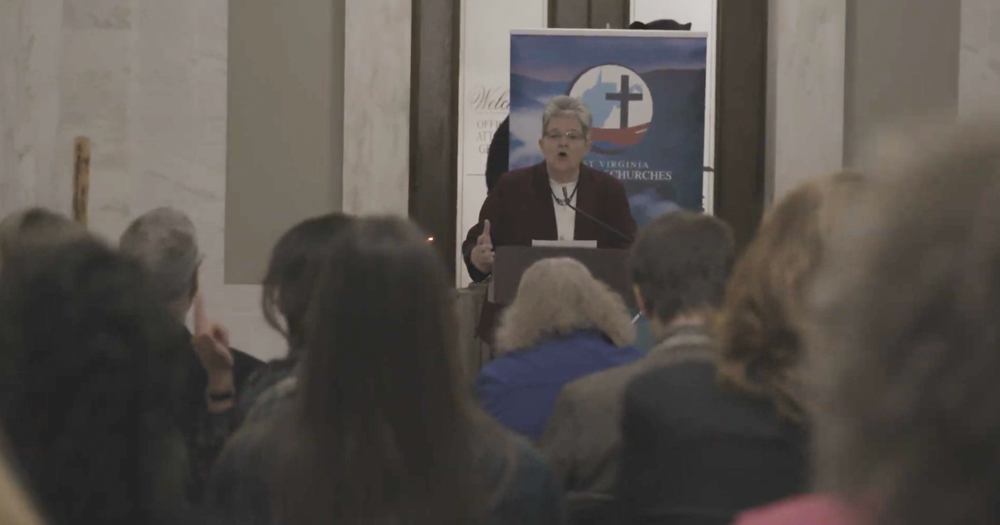
Texas: Justice Research Group successfully advocated to move the mobile crisis response program in-house within Harris County - ensuring that crisis response programs – deploying trained mental and behavioral health specialists in coordination with law enforcement – are supported for the long run.
Oklahoma: Oklahomans for Criminal Justice Reform and the Terrence Crutcher Foundation helped pass a bill expanding the number of mental health, substance use, diversion, education, housing, and employment programs that can be funded through Oklahoma’s County Community Safety Investment Fund. It ensures every county gets a predetermined portion of the fund, particularly helping smaller, rural towns access services that address the root causes of crime and reduce reliance on jail as a first response.
Oregon: The Drug Policy Alliance helped pass HB5204, which appropriates $221.2 million for selected programs, specialty courts, restorative justice grants, mental health programs, and other behavioral health investments.
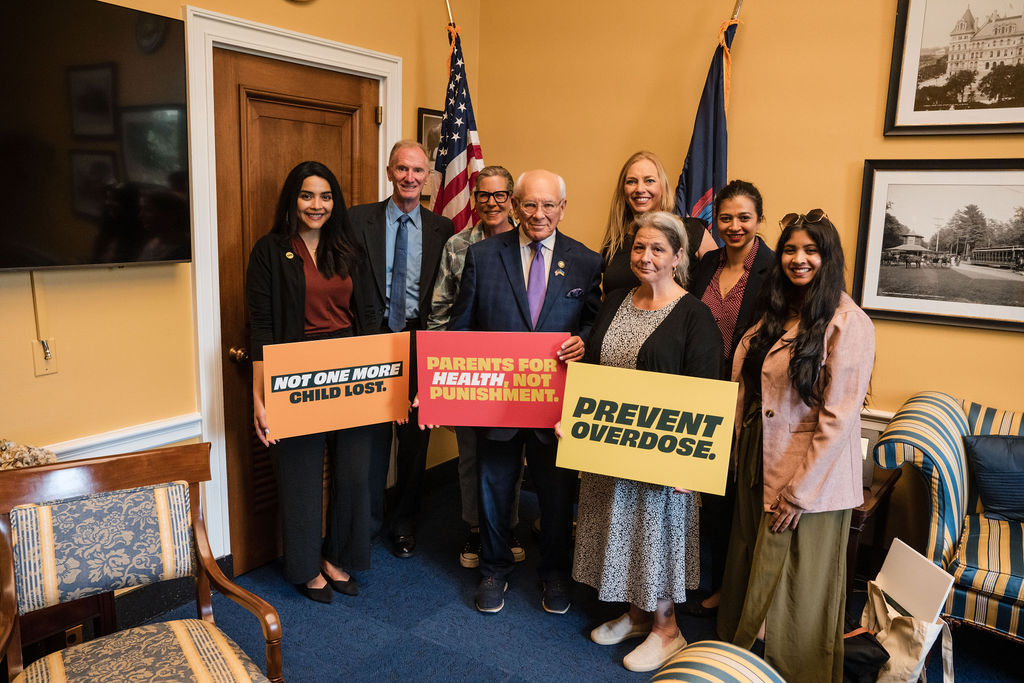
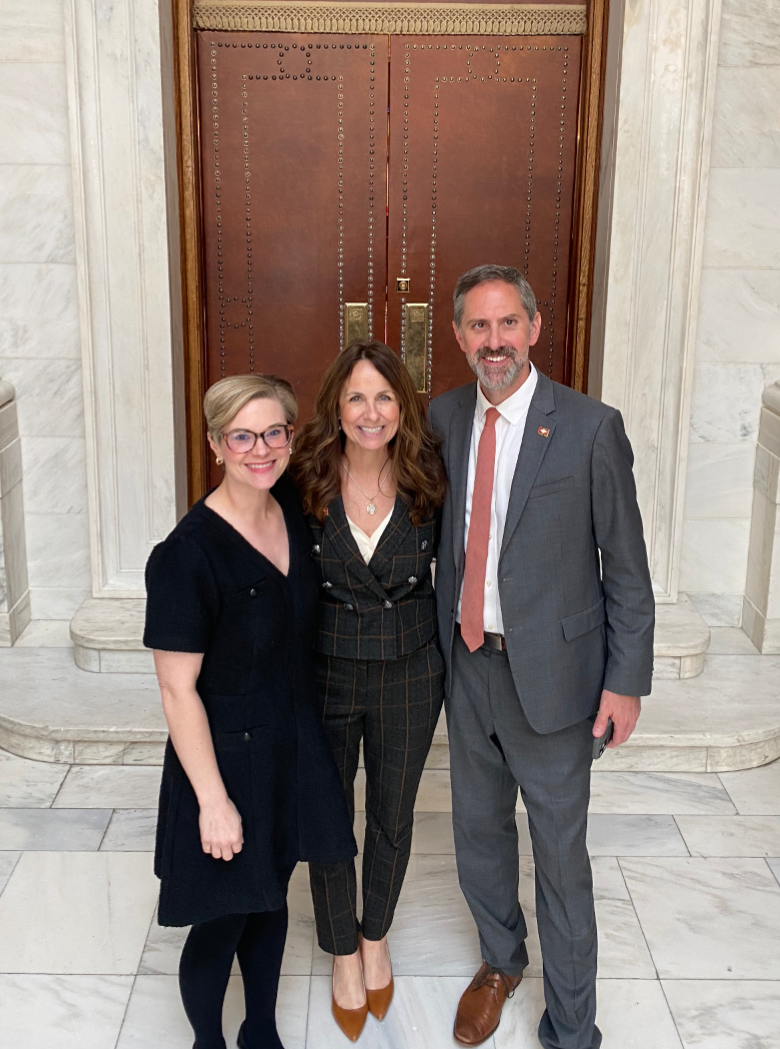
Texas: Justice Research Group successfully advocated to move the mobile crisis response program in-house within Harris County - ensuring that crisis response programs – deploying trained mental and behavioral health specialists in coordination with law enforcement – are supported for the long run.
Oklahoma: Oklahomans for Criminal Justice Reform and the Terrence Crutcher Foundation helped pass a bill expanding the number of mental health, substance use, diversion, education, housing, and employment programs that can be funded through Oklahoma’s County Community Safety Investment Fund. It ensures every county gets a predetermined portion of the fund, particularly helping smaller, rural towns access services that address the root causes of crime and reduce reliance on jail as a first response.
Oregon: The Drug Policy Alliance helped pass HB5204, which appropriates $221.2 million for selected programs, specialty courts, restorative justice grants, mental health programs, and other behavioral health investments.
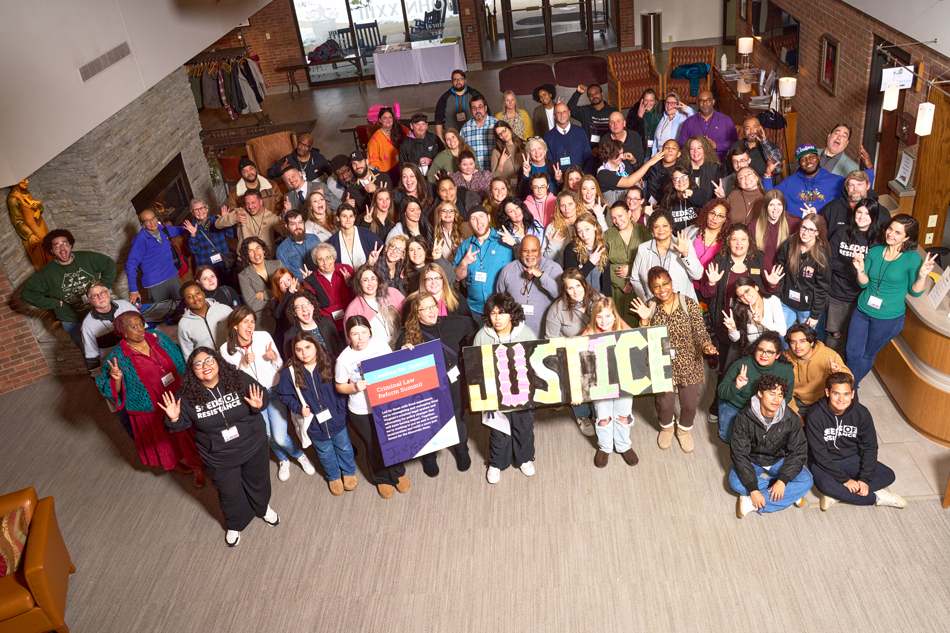
Texas: Justice Research Group supported Harris County leaders to move an independent mobile crisis response program (dispatching mental health clinicians to handle certain calls) permanently into the county's public health department. This ensures that crisis response programs are supported for the long run, and also frees up law enforcement to focus on preventing and solving violent crime.
Oklahoma: Oklahomans for Criminal Justice Reform and the Terrence Crutcher Foundation helped pass a bill expanding the number of mental health, substance use, diversion, education, housing, and employment programs that can be funded through Oklahoma’s County Community Safety Investment Fund. It ensures every county gets a predetermined portion of the fund, particularly helping smaller, rural towns access services that address the root causes of crime and reduce reliance on jail as a first response.
Oregon: The Drug Policy Alliance helped pass HB5204, which appropriates $221.2 million for selected programs, specialty courts, restorative justice grants, mental health programs, and other behavioral health investments.

Arkansas: Human Rights for Kids and the Conservative Political Action Coalition (CPAC)’s Center for Combating Human Trafficking worked with lawmakers across the aisle on a bold bill, making Arkansas the first state to categorize children – who were recruited into gangs and coerced into committing crimes – as victims. This unlocks a suite of support services, helping kids avoid growing up in the justice system while getting the help they need. It could also save taxpayers $1M+ a year, and prevents future crime by helping kids avoid gang life and access job opportunities and other support.
Louisiana: Invest in Louisiana and Louisiana Progress worked on a bill to reduce penalties for possessing personal marijuana paraphernalia. Instead of jail time, people now face fines – representing a shift toward more proportionate responses to minor drug offenses.HB5204, which appropriates $221.2 million for selected programs, specialty courts, restorative justice grants, mental health programs, and other behavioral health investments.

West Virginia: The West Virginia Center of Budget and Policy and the American Friends Service Committee helped defeat a bill that proposed elevating the crime of trespass from a misdemeanor to a felony, which would increase the number of homeless people in jail and prisons. Killing this bill means that people continue to be held responsible for their conduct, but in more proportionate ways that also don’t unnecessarily add to unsafe overcrowding.
North Dakota: Prison Fellowship, Conservative Political Action Coalition (CPAC), and Unify.us blocked legislation that would have removed incentives to earn earlier release through good behavior and participation in rehabilitation programs; restricted work release eligibility and conditions for incarcerated individuals; and increased mandatory minimum sentences for certain offenses.
Missouri: FAMM and Unify.us successfully blocked HB 862, the lead in a series of bills in the House and Senate that would create significant time served requirements (truth in sentencing), removing any incentive to earn good behavior and education credits to potentially reduce sentences.

Tennessee: Stand for Children Tennessee helped defeat a bill that would have imposed fees on parents of youth involved in the justice system and shifted the cost burden of incarceration and supervision onto families.
National: FWD.US produced a new study on the cost of justice involvement for American families. The report unveiled that supporting a loved one who is incarcerated collectively costs families approximately $350 billion a year for communication, visits, and commissary items, in addition to lost wages and other expenses.

Arizona: Dream.org, FAMM, One Voice United, Stand for Children Arizona, and several others worked with legislators to pass SB 1507. The bill establishes a new independent corrections oversight office with authority to investigate conditions across Arizona’s prisons, ensure transparency, protect rights, and regularly report detailed findings to the legislature.
Oklahoma: Right on Crime helped pass a bill to establish an independent oversight committee within the Office of Juvenile Affairs to investigate misconduct allegations.

Florida: Florida Rights Restoration Coalition helped pass a bill that allows people to earn credits toward professional licenses by recognizing certain classes completed during incarceration. It requires the Department of Corrections to work with licensing boards to ensure these achievements count, and helps improve job opportunities and supports successful reentry into the workforce.
Oklahoma: Prison Fellowship worked on a bill that expands eligibility for state tuition aid grants to incarcerated individuals who are enrolled in a prison education program and are within five years of their release. This bill aims to reduce recidivism by helping eligible incarcerated students earn college credentials that make reentry easier and more productive.
.jpeg)
Maryland: The Sentencing Project, with support from FAMM, ACLU and FWD.us, helped pass a bill that creates resentencing opportunities for people convicted of crimes before the age of 25 and have served more than 20 years in prison—people who have served significant time and demonstrated rehabilitation, allowing them to safely reintegrate into their communities.
Georgia: The Sentencing Project, in partnership with FWD.us and Unify.us, helped pass a bill that creates resentencing opportunities for survivors of domestic violence and sexual assault serving long prison terms for acts of self-defense, as well as establishing an affirmative defense at sentencing. This legislation allows individuals to seek resentencing and demonstrate rehabilitation.
Utah: For The People and Right on Crime helped pass a rule that allows prosecutors to initiate a special attention review at the Board of Pardons & Parole to adjust parole conditions or to review and change prior Board decisions when exceptional circumstances exist.
Federal: The Sentencing Project, REACH of West Virginia, EJUSA andFWD.us supported the implementation of executive clemency that commuted the sentences of more than 2,000 people serving outdated, disproportionate, and unjust federal prison terms, sparing 16,360 prison years and three-quarters of a billion dollars in taxpayer savings.

Arizona: Recidiviz worked with the Arizona Department of Corrections, Rehabilitation, and Reentry (ADCRR) to analyze and implement a new supervision policy, moving low-risk individuals to a less restrictive "Low-Risk Minimum Supervision" (LRMS) level. This level already existed but 0 of the 7,000 people on supervision in the state were on it due to data and administrative challenges. Recidiviz’s tools identified a way to safely categorize people into the appropriate level of supervision. Now, 4,500 people per year – or about 39% of the state's supervised population – are on LRMS. This allows parole officers to reduce their contacts by 40% and increase their capacity for high-need clients by 86% – ultimately increasing the success of supervision and the possibility that someone can complete their terms.

National: JUMP (the Justice and Upward Mobility Project), a project of The Just Trust, launched in early 2025, focused on education, employment, and upward mobility. The project has since launched major partnerships with X, and Y. (more below).
Arizona: Stand for Children Arizona helped pass a law that allows people on probation who join a state or federally-recognized apprenticeship program to work flexible hours and travel out of their approved probation jurisdiction for work, as long as they return home by midnight. It updates the state's rules to support job training and career development while balancing public safety.
Maryland: REFORM Alliance and Clean Slate Now helped pass the Expungement Reform Act of 2025, ensuring that technical violations will no longer serve as a barrier to record expungement for people who completed their supervision sentences. It also expands the list of offenses eligible for expungement and guarantees record sealing for people who were pardoned for marijuana convictions. This impacts thousands of Marylanders with minor, non-criminal supervision violations on their records.
California: The Alliance for Safety and Justice supported a key budget trailer bill that made a 2022 record expungement bill retroactive back to 1973. Thanks to this and several other reforms championed by ASJ in the state in recent years, ~7 million people in California are now eligible for some form of record clearance.

Ohio: Prison Fellowship helped pass legislation that establishes a Certificate of Qualification for Housing. It aims to alleviate barriers to housing by allowing courts to issue the certificate if the individual demonstrates that the certificate will materially assist in obtaining housing, is necessary for living a law-abiding life, and does not pose a risk to public safety.
Utah: Right on Crime supported the passage of a bill that expands access to mental health and county-based services for individuals on probation and parole.
Offensive wins are happening all across the country, even if they don’t make the headlines. Between 2022 and 2023, we tracked a 171% jump in offensive victories. From there, those efforts held steady in 2024 and 2025 despite mounting headwinds. This reflects the power of sustained funding year over year.
Of 17 tracked policy efforts, the most common offensive victories were around re-entry and second chances, representing 14% of all tracked impacts. Next was sentencing reform at 13%, improving conditions at 8.5%, and victims rights at 8%.
The wins tracked occurred in 41 states + federal, the states with the most affirmative wins for 2022-2025 were in California, Oklahoma, and Louisiana.
As political conditions tightened, our partners pivoted — increasing defensive efforts by 155% from 2022-2025 to safeguard prior wins and resist punitive rollbacks.
In this time, we tracked that our partners helped defeat or mitigate 103 policies that would have arbitrarily widened the funnel into the justice system, and kept people there longer.
Narrative campaigns grew steadily in this period as well – by 130% – as our grantees shifted strategies in a tougher policy environment particularly in 2024 and 2025, investing in tools to sustain public support and shift perceptions of justice and safety.
Implementation efforts have surged more than 200% since 2022, ensuring that affirmative policy wins groups worked to pass in prior years actually went into effect.
18 states and the federal government passed policies advancing youth justice solutions that are data-informed and human-centered.
Our partners helped advance, implement, and pass 99 policies to increase transparency in the justice system and 139 policies to improve conditions – centering dignity and humanity – for people in prison and jail and on supervision.
Our grantee partners in the Safer Communities Accelerator have supported the emergence or integration of more diverse safety and response systems in 30 cities, most in close collaboration with local law enforcement.